For many businesses, time tracking still means an Excel spreadsheet, paper-based attendance sheets, or data collected at the end of the month. These solutions may initially appear simple and cost-effective, but they have a significant drawback: the recorded working hours may not necessarily match the actual hours worked.
This can be particularly problematic if employees work across multiple sites, in different shifts, or on varying tasks.
What Does a 10-Minute Daily Discrepancy Mean in Practice?
Let's consider a simple example!
A company employs 30 workers. Suppose there is an average daily discrepancy of 10 minutes per employee in the time records.
This might initially seem negligible.
However, let's look at the numbers!
-
30 employees × 10 minutes = 300 minutes daily
-
This totals 5 working hours daily.
-
With 22 working days, that's 110 working hours monthly.
-
Annually, with 220 working days, it amounts to 1,100 working hours.
This equates to nearly 138 full eight-hour workdays.
If an employee's hourly employer cost is, for example, 3,000 HUF, then the monthly 110 hours are worth 330,000 HUF, and annually 3,300,000 HUF.
However, this doesn't automatically mean this much lost money. The calculation illustrates the monetary value of inaccurately recorded working hours. Actual loss may occur if the discrepancy leads to unjustified payments, accounting errors, or lost work.
Where Do These Discrepancies Arise?
Inaccurate records aren't necessarily due to intentional misuse.
Often, everyday situations cause them:
-
An employee forgets to log their arrival or departure.
-
The attendance sheet is filled out days later.
-
The shift manager has to compile multiple employees' working hours retrospectively.
-
An employee starts work at a different location than originally planned.
-
Overtime, breaks, or shift changes are not recorded correctly.
A single such case can be easily managed. However, if hundreds of time entries need checking monthly, administration can quickly become unmanageable.
Moreover, inaccurate data can cause not only financial issues but also complicate payroll, workforce planning, and determining the actual labour costs of projects.
Management Time Also Costs Money
The cost of time tracking isn't measured solely in employee hours.
Consider how much time a company director, shift manager, or HR staff might spend:
-
searching for missing attendance data;
-
coordinating with employees over the phone;
-
correcting erroneous entries;
-
verifying overtime;
-
preparing the monthly accounts.
If this takes even a few hours monthly, it ties up resources that could be used for other value-creating tasks.
The real question, therefore, is not just whether the time tracking is accurate, but also how much time and money it takes to ensure accuracy.
How Can Digital Time Tracking Help?
One of the main advantages of digital systems is that time recording can be directly linked to the work being done.
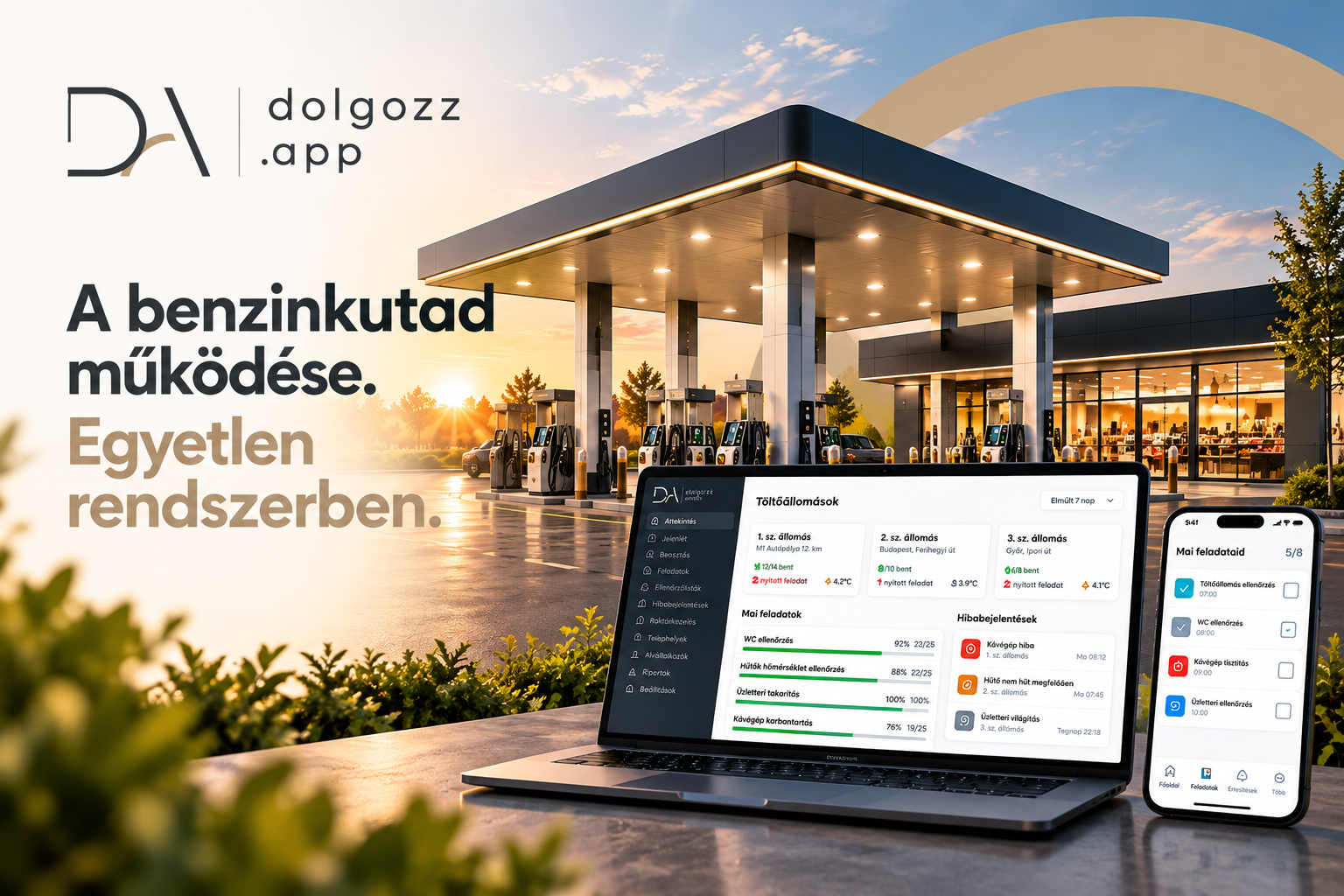
Dolgozz App, for example, offers various check-in options, including GPS-based, NFC, iBeacon, and PIN code solutions.
This allows businesses to choose a method that fits their operations.
A cleaning company operating across multiple sites may need something different than a retail chain or a team working in a single workshop.
With digital records, managers can more easily review recorded working hours, attendance data, and any discrepancies.
Of course, no app alone guarantees that all time data will be flawless. Proper internal processes, clear rules, and employee communication are also necessary.
The Goal is Transparency, Not Control
A well-functioning time tracking system benefits not only the employer.
It's also important for employees that worked hours, overtime, and shifts are properly documented.
A transparent system can reduce misunderstandings, simplify accounting, and help prevent disputes over working hours.
The aim is not to unnecessarily monitor every minute but to enable the business to operate based on reliable data.
Conclusion: Ten Minutes a Day Can Add Up Over Time
For a company with 30 employees, a daily 10-minute discrepancy can mean 110 working hours monthly. This is a significant amount worth taking seriously.
Accurate time tracking is not just a cost issue. It can help reduce administration, improve planning, and create more transparent operations.
It's worth asking a simple question: how closely does the recorded working time in our own business match reality?